What is Īśvara in Vedānta: why "where is God?" is not the right question
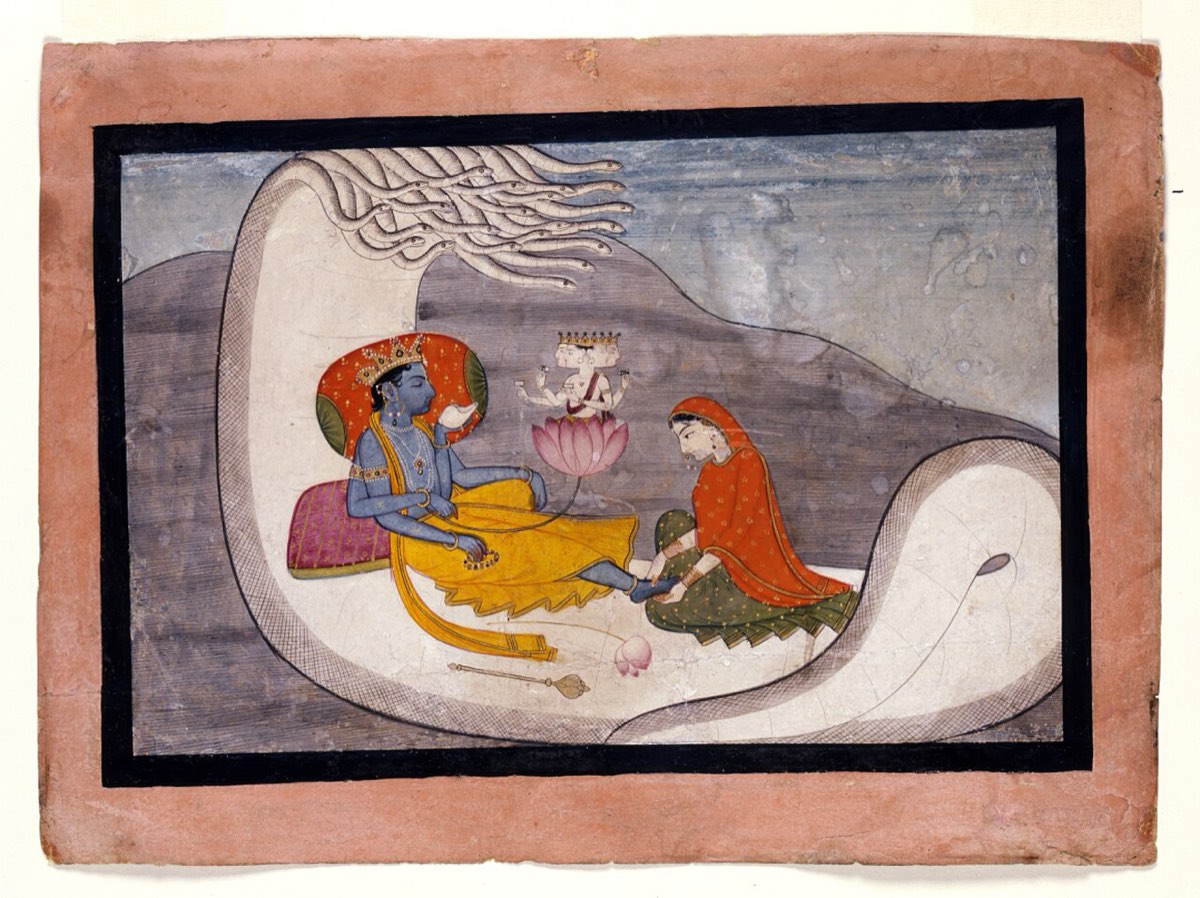
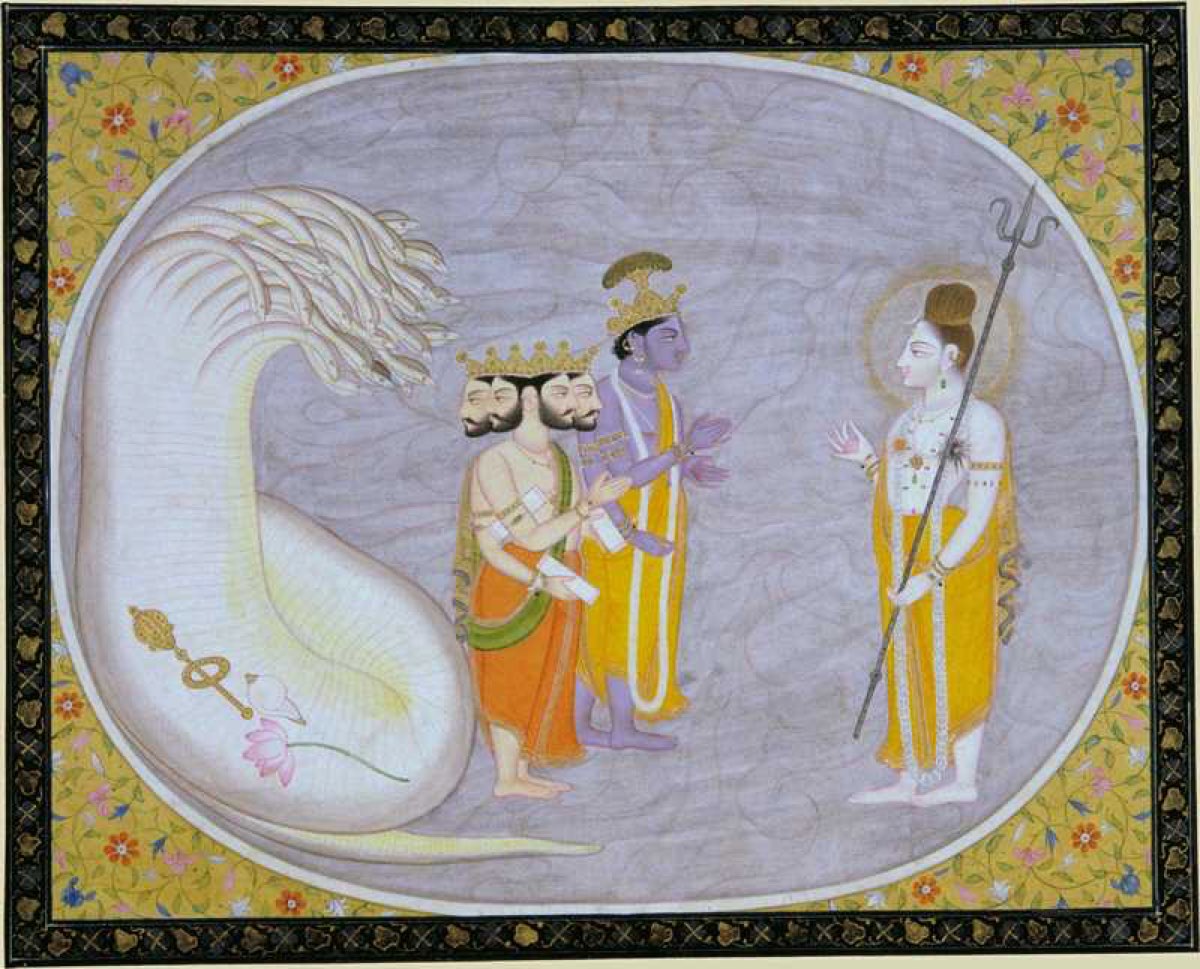
In Vedānta, Īśvara is not a person in a place, but the substance and intelligence of all that exists; schools disagree on how far that idea reaches.
· 3 min read · Sources

In 1 minute
- In the teaching attributed to Swāmi Dayānanda, the right question is "what is God?", because "where" assumes a person with a body and an address.
- In Advaita Vedānta, Īśvara is the material and instrumental cause of the world, the way fabric is the substance of a shirt; hence the talk of manifestation rather than creation.
- This is a philosophical thesis of one school: other lines of Vedānta see Īśvara as a distinct creator, and science has no way to confirm either view.
Full article
Where is God? For Vedānta, the question is already askew. To say "where" is to imagine someone with a body, a form, and an address, a figure occupying a point in space and living in a certain time. In a teaching attributed to Swāmi Dayānanda Sarasvatī, a twentieth-century teacher of Vedānta, the right question is a different one: what is God?
The shift in question sums up an old philosophical dispute. Īśvara, the Sanskrit term usually translated as "Lord," has meanings that vary with era and school within Hinduism: it can mean sovereign, supreme Self, or a personal deity. The teaching lays out the reading of Advaita Vedānta, the school of non-duality, and is a metaphysical thesis of the Vedic tradition, not a scientific conclusion.
Neither potter nor separate clay
The starting point is the idea that everything that exists is Īśvara. There would be no separation between creator and created: the matter and the intelligence that shapes it would not be external to God, they would be God himself. That is what Advaita Vedānta affirms in saying that Īśvara is, at the level of experience, the material and instrumental cause of the universe.
The image used is that of fabric and a shirt. There is no gap between the two, because the shirt is made of that fabric. In the same way, no distance would separate the Supreme Being from the universe, and the distance one imagines would be mental, produced by language, by the senses, and by duality. If the Creator is everything, then even space and time are him, as are the body, the mind, and atoms. The potter serves as a comparison only up to a point: he shapes clay that exists apart from him, while Īśvara would be, at once, the mold and the clay.
Knowledge and consciousness
The teaching then draws a distinction. Matter, in itself, has no consciousness. But the order visible in the universe, in atoms, in galaxies, in the cycles of life, would indicate that everything is structured by knowledge, and knowledge exists only in a conscious being. The visible world would be the manifestation of Īśvara's knowledge and consciousness.
From there comes an argument about ignorance, which could only apply to a conscious being. A stone isn't ignorant, it simply is; a conscious being can be ignorant, and, for that very reason, can know. Wherever there is total knowledge, the Vedic tradition claims, there is Īśvara. In this reading, God is at once the architect and the brick, the fire and the heat, the water and its reflection.
Manifesting, not creating
The word "creation" is also too poor, the teaching says: it brings to mind a craftsman separate from his work, and that wouldn't hold for Īśvara. That's why the Vedas, the tradition's foundational texts, would prefer abhivyakti, "manifestation," over sṛṣṭi, "creation." The world is manifested out of Īśvara himself.
One view among several
It's worth noting that not all of Vedānta thinks this way. Vishishtadvaita, the sub-school associated with Rāmānuja in the eleventh century, sees Īśvara as the supreme creator, synonymous with Brahman and equated with Vishnu, at once the material and efficient cause of the world, transcendent and immanent. In devotional Hinduism, Īśvara is also the name given to each devotee's preferred deity, and an epithet of Shiva.
Within Advaita itself, the identity between Īśvara and the individual is recognized at the ultimate level of liberation, not at the level of everyday experience.
The farmer and the tree
When an Indian farmer looks at a tree, a river, or a stone and says "this is God," the text sees not superstition, but a quiet wisdom passed down over millennia. The farmer may not know how to explain it in philosophical terms, but lives out the idea that nothing is separate from Īśvara.
The teaching concludes with an invitation to stop expecting a body, an age, a gender, or a form. Asking what Īśvara is leads to an answer in few words: it is everything, it is the Self, it is the backdrop of all experience. And it is what the person already is, before any name.
Sources and references for this article
Teaching attributed to Swāmi Dayānanda Sarasvatī on Īśvara
Ishvara, Wikipedia (English)Translated from Portuguese. This article was rewritten from a post on the original blog, in Portuguese. Read the original
Get the best articles of the week
One email a week, no spam. Unsubscribe anytime.
Read next
 Vedanta and Yoga · VideoWhat is the form of God? What the hymn to Dakṣiṇāmūrti says, in Vedānta's reading
 Vedanta and YogaConsciousness with a body: what Vedānta says the “self” is
 Western esotericism · VideoThe Apocryphon of John, the Gnostic text where the world is born of a flaw
 Western esotericismGnosticism: origins, schools, texts, and what survived the repression
 Vedanta and Yoga · VideoIs the universe real? Advaita Vedānta's three answers, from creation to "never born"