How to recognize a false prophet, according to Kardec
Kardec offers moral and rational criteria for being wary of false prophets, among the living and among spirits said to communicate.
· 3 min read · Sources

In 1 minute
- By its fruits the tree is known: for Kardec, a mission is proven by the moral good it produces, not by wonders.
- He warns of impostors among the living and among spirits who disguise themselves with venerated names, and of vain, self-styled infallible mediums.
- The criterion proposed is logic, morality, and comparison among serious groups: where there is pride and exclusivity, there would be deception.
Full article
How does one know whether someone who speaks in God's name deserves trust? Jesus answers in the Gospel with an agricultural image: a tree is known by its fruits. The answer comes from Matthew 7 and is picked up again in Matthew 24, where he warns that false Christs and false prophets will arise. Chapter 21 of The Gospel According to Spiritism starts from these passages to deal with a problem the author considers urgent: spiritual imposture.
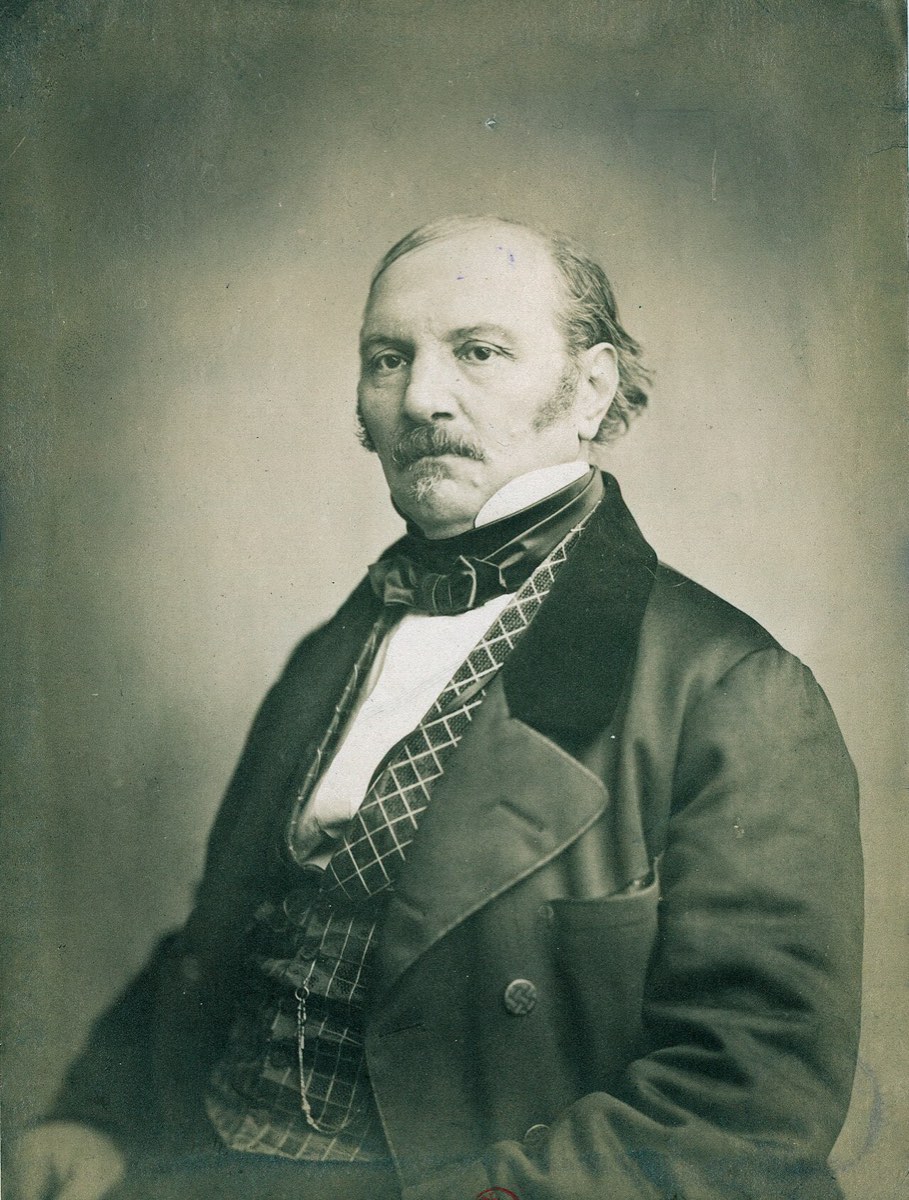
Allan Kardec, the French educator who systematized Spiritist doctrine in the nineteenth century, published the book in 1864. The guidance is the doctrine's own and belongs to the realm of religious belief. Even so, the chapter interests the outside reader, because it offers criteria for examining the field itself, including the figure of the medium.
By their fruits
Jesus warns that false prophets present themselves in sheep's clothing while being wolves underneath. To tell them apart, one need only look at the result: a good tree does not bear bad fruit, and a bad tree does not bear good fruit. Grapes are not gathered from thorn bushes, nor figs from thistles. The good man, by this logic, reveals the good he carries in his heart, and the false prophet is unmasked by his works.
What a true prophet is
Kardec clarifies that, in the Gospel sense, a prophet is not only someone who predicts the future. It is anyone to whom God would have entrusted the task of teaching, enlightening, and uplifting others. The marks of a true envoy would be humility, modesty, moral purity, unconditional love, and consistency between word and action. A mission, the chapter says, is proven by the moral good it produces, not by wonders or displays of power.
Impostors among the living
History, the chapter says, is full of people who presented themselves as Christ, Mary, Elijah, or some other great prophet. Some took advantage of popular belief and ignorance to gain power, money, or prestige. They proclaimed convenient visions, dreams, and revelations, and their teachings fed vanity, division, pride, and authoritarianism. Kardec adds a comparison: just as one does not hand an army to an ignorant man, God would not entrust an elevated mission to an inferior spirit.
Impostors among the spirits
Spiritism sees an even more dangerous form of deception on the spiritual plane. Discarnate spirits, proud or ill-intentioned, would disguise themselves with venerated names to spread absurd, vain, or divisive ideas. They would manipulate vain or fragile mediums, isolate groups, and sow discord.
The chapter offers warning signs: be wary of anyone who demands adoration, strange practices, or mystical rituals; of anyone who preaches isolation, exclusivity, or superiority; and of communications with ideas contrary to logic, morality, and science. Where there is pride, the text sums up, there is deception: truth spreads, error isolates itself.
Discernment in practice
The underlying rule comes from the first letter of John, which instructs believers to try the spirits to see whether they are of God. Truth does not fear scrutiny, and a good spirit is recognized by its moral qualities and the elevation of its thought. Kardec recommends putting every message to the test of logic and charity, dismissing any spirit that flatters the medium or declares itself the only channel of truth, and comparing what is received with what comes from other serious groups.
For the chapter, no truth would be revealed to a single group alone. The good medium is an instrument, not an ego: never considers themselves privileged or infallible, and accepts correction, study, and progress. Whoever receives messages only from one spirit, however exalted, would be under obsession, the term Spiritism uses for a spirit's persistent influence over a person.
There is also a collective check. Serious groups should communicate with one another, messages need to be weighed against the Gospel, reason, and Spiritist morality, and contradictions must be rejected. True communications would confirm themselves through coherence. Error, in time, would dissolve.
Jeremiah and the false seers
The chapter turns to the prophet Jeremiah, who already denounced those who claimed to have dreamed in order to deceive, those who spoke in God's name without having been sent, and those who abused the people's faith for profit and vanity.
Kardec's conclusion is a three-part criterion: the protection is discernment, the shield is humility, and the measure is the fruit. Where there is love, truth, humility, and peace, he says, there is Christ.
Sources and references for this article
Allan Kardec, O Evangelho Segundo o Espiritismo (The Gospel According to Spiritism), chapter 21
The Gospel According to Spiritism, Wikipedia (1864 publication and overview)Allan Kardec, WikipediaMatthew, chapter 7 ("by their fruits ye shall know them"), Almeida Corrigida Fiel BibleMatthew, chapter 24 ("there shall arise false Christs, and false prophets"), Almeida Corrigida Fiel BibleFirst Letter of John, chapter 4 ("try the spirits whether they are of God"), Almeida Corrigida Fiel BibleJeremiah, chapter 23 (the false prophets), Almeida Corrigida Fiel BibleTranslated from Portuguese. This article was rewritten from a post on the original blog, in Portuguese. Read the original
Get the best articles of the week
One email a week, no spam. Unsubscribe anytime.
Read next
 Death and beyond · VideoAllan Kardec's “testament”: what is known and what is narrative
 Death and beyondKardec, Socrates, and Plato: the morality of Christ separated from dogma in the Spiritist Gospel
 Vedanta and Yoga · VideoThe inner war: what the Bhagavad Gītā says to those caught between duty and fear
 Vedanta and YogaGita, lesson 20: consciousness isn't in the world, the world is in it
 Death and beyond · VideoWhat souls do after death, in a Spiritist view: work, study, and service