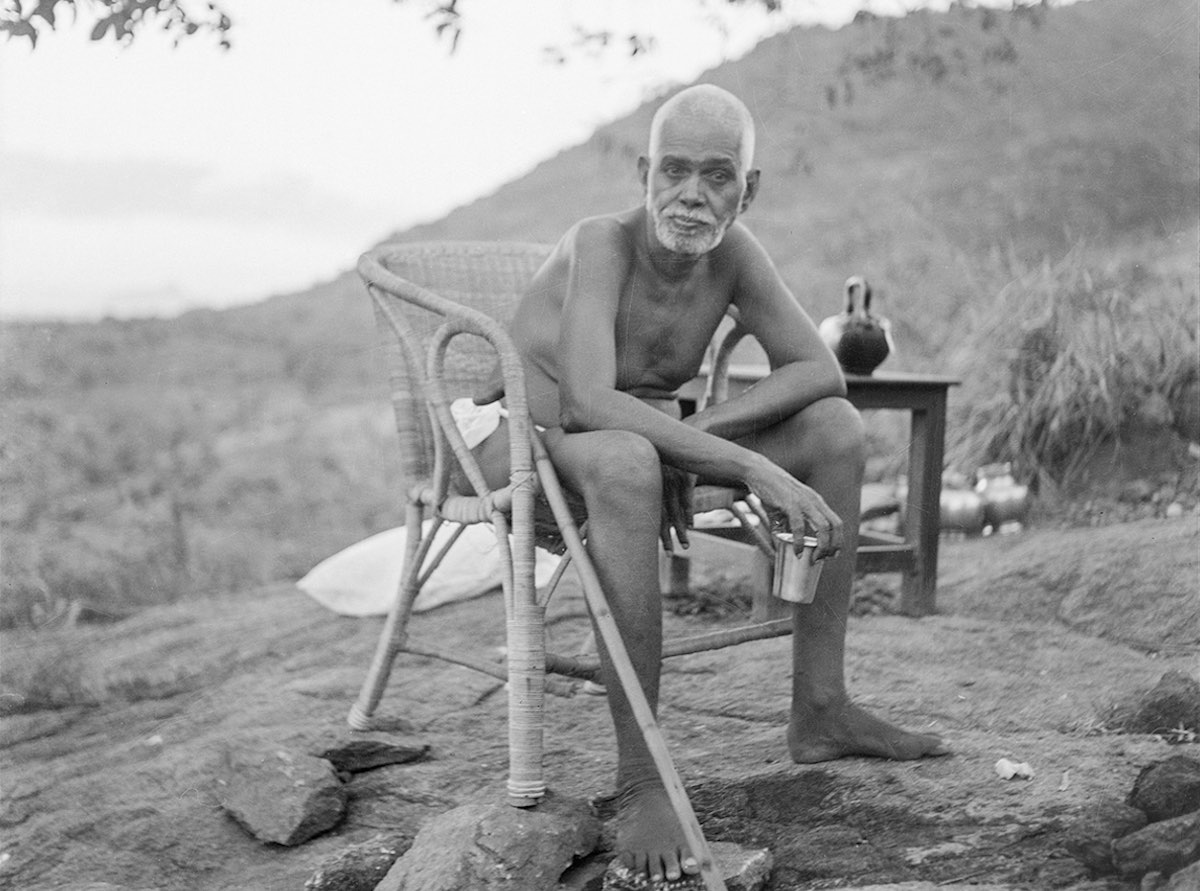
Upanishads: what the 108 texts underlying Indian philosophy are, and what they teach
The Upanishads gather the Vedic sages' experience of reality, the cosmos, and being; ten of them are regarded as the principal ones.
· 4 min read · Sources
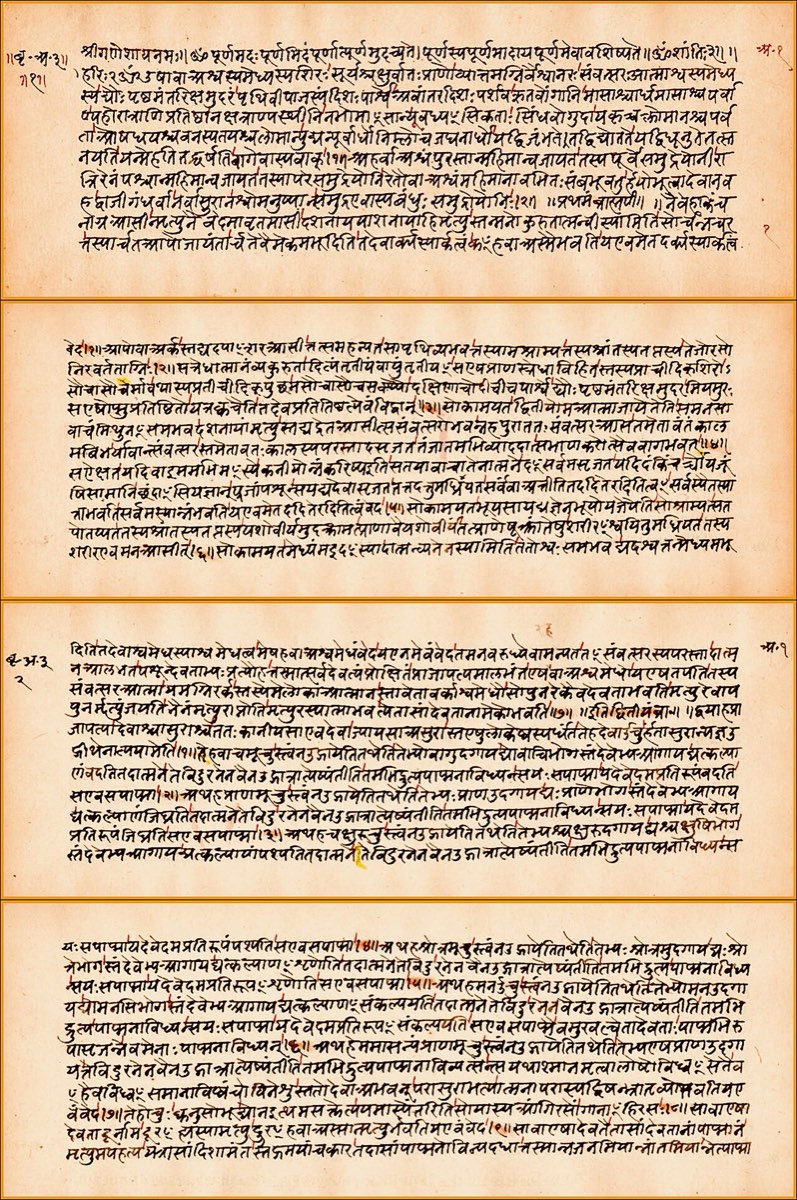

In 1 minute
- The Upanishads record what the Vedic sages observed about reality, the cosmos, and being, and they underlie Vedānta.
- The 108 works are divided into five categories; ten are regarded as the principal ones, from the Īśā to the Bṛhadāraṇyaka.
- The sages taught through everyday images, such as the chariot, the rope mistaken for a snake, and the tree with roots above.
Full article
Before any doctrine, the Upanishads are an account of method. For Project Shivoham, a channel devoted to Vedānta, the body of texts underlying Indian philosophy is not dogma fallen from the sky, but a record of what the ṛṣis, sages of the Vedic tradition, observed about reality, the cosmos, and the nature of being.
The name suggests the scene: upa (“near”), ni (“below”), shad (“to sit”), the act of sitting close to a teacher to receive instruction. The Upanishads are part of Hinduism's śruti scriptures, “that which was heard,” and arose as commentaries on the Vedas, India's oldest texts, which is why they are known as Vedānta, “the end of the Veda.” They reached the West in the early 19th century, in a translation from Persian into Latin that shaped Schopenhauer's thinking. The counts vary: the tradition the video recalls speaks of 108 works, while other lists reach as many as 123. The claims about Brahman, rebirth, and liberation belong to the Vedic tradition, not to scientific studies.
Knowledge that goes beyond logic
The video's introduction separates three faculties. Buddhi is rational intelligence. Tarka is deductive logic. Above both would be an intuition born of prolonged devotion to knowledge.
As examples of this kind of insight, the narrator cites the Indian mathematician Srinivasa Ramanujan and the Russian chemist Dmitri Mendeleev, whose discoveries are said to have come from intense concentration, beyond ordinary reasoning. The comparison is the video's own, not drawn from studies of these scientists. In this reading, the Upanishads follow the same path: careful observation, refined logic, and introspection, not faith alone.
They are presented as systems of knowledge about cause and effect in nature and the cosmos, written over time, some attributed to historical figures, such as King Janaka.
Five categories
The 108 works group into five families: Yoga, concerned with practice and discipline; Vedānta, philosophy and metaphysics; Mantra, on vibrational language; Sannyasa, devoted to the life of renunciation; and Sharīra, which deals with the body's physiological and subtle aspects.
The ten most cited
The Īśā deals with the presence of Brahman, the ultimate reality, in everything, and with renouncing pairs of opposites, such as pleasure and pain. The Kena asks “by whom?” does the mind move and see through the eyes, pointing to consciousness as the hidden engine of experience. The Kaṭha is a dialogue between the young Nachiketas and Yama, lord of death, on the nature of the Self and immortality. The Praśna gathers six questions about life, prāṇa (vital force), mind, and meditation, posed to the sage Pippalāda.
The Muṇḍaka distinguishes higher knowledge, of the Self, from lower knowledge, tied to rituals and the world, and uses the image of two birds in a tree: one eats the fruit, the other only watches. The Māṇḍūkya, the shortest, with 12 verses, deals with four states of consciousness: waking, dreaming, dreamless sleep, and a fourth, turīya, held to be the absolute. The Taittirīya lays out the five kośas, the layers of being, from the physical to the blissful.
The Aitareya discusses the origin of the cosmos from a single principle, with creation as an expression of the Self. The Chāndogya is famous for the formula Tat Tvam Asi, “thou art that,” which asserts the unity of jīva, the individual, and Brahman. The Bṛhadāraṇyaka, the longest, turns to identity, truth, the soul, and death.
Ideas that run through the whole
Some notions recur in nearly every work: Brahman, the ultimate reality; Ātman, the inner, eternal Self; māyā, perceptual illusion; mokṣa, liberation from the cycle of births and deaths; jñāna, liberating knowledge; dhyāna, meditation; bhakti, devotion; karma, action and consequence; punarjanma, rebirth; Oṁ, the primordial sound; prāṇa; and dharma, the universal ethical principle.
Images for teaching
The ṛṣis taught through everyday symbols. The wheel, chakra, represents the cycle of birth and death, samsāra. In the chariot, body and mind are driven by the senses, which would be the horses, under the reins of the mind. Fire needs wood, just as the Self shines when fed with knowledge. The rope mistaken for a snake shows the fear born of ignorance, avidyā, which the light of knowledge dissolves. The lotus remains pure in the mud.
There is also the inverted tree, with its roots above, in Brahman, and its branches below, in the world. The same tree reappears in the Bhagavad Gītā, tied to the illusion of the material world. That is why, the video says, the Gītā is called Sāraṁ Upaniṣadām, “the essence of the Upanishads.”
The final invitation
The Upanishads call for introspection, not blind belief: a careful look at mind and nature, rigorous reasoning, and openness to inner experience. Human power, in this view, lies less in intellect than in a knowledge that surpasses it, made of silence and inner freedom.
Sources and references for this article
Project Shivoham, video "The History and Essence of the 108 Upanishads" (Special Chapter)
Upanishads, Portuguese WikipediaTranslated from Portuguese. This article was rewritten from a post on the original blog, in Portuguese. Read the original
Get the best articles of the week
One email a week, no spam. Unsubscribe anytime.
Read next
 Vedanta and YogaKatha Upanishad: the young Nachiketas and the question Death tried to dodge
 Vedanta and YogaGita, lesson 21: what is nonexistent, what is false, what is real
 Western esotericism · VideoThe ALL: why Hermeticism gives ultimate reality a name that sets no limits
 Science and consciousnessVedānta and quantum physics: what the observer has to do with reality
 Vedanta and Yoga · VideoSahaja avasthā, the natural state of Being: the image of the rope and the snake in Vedānta