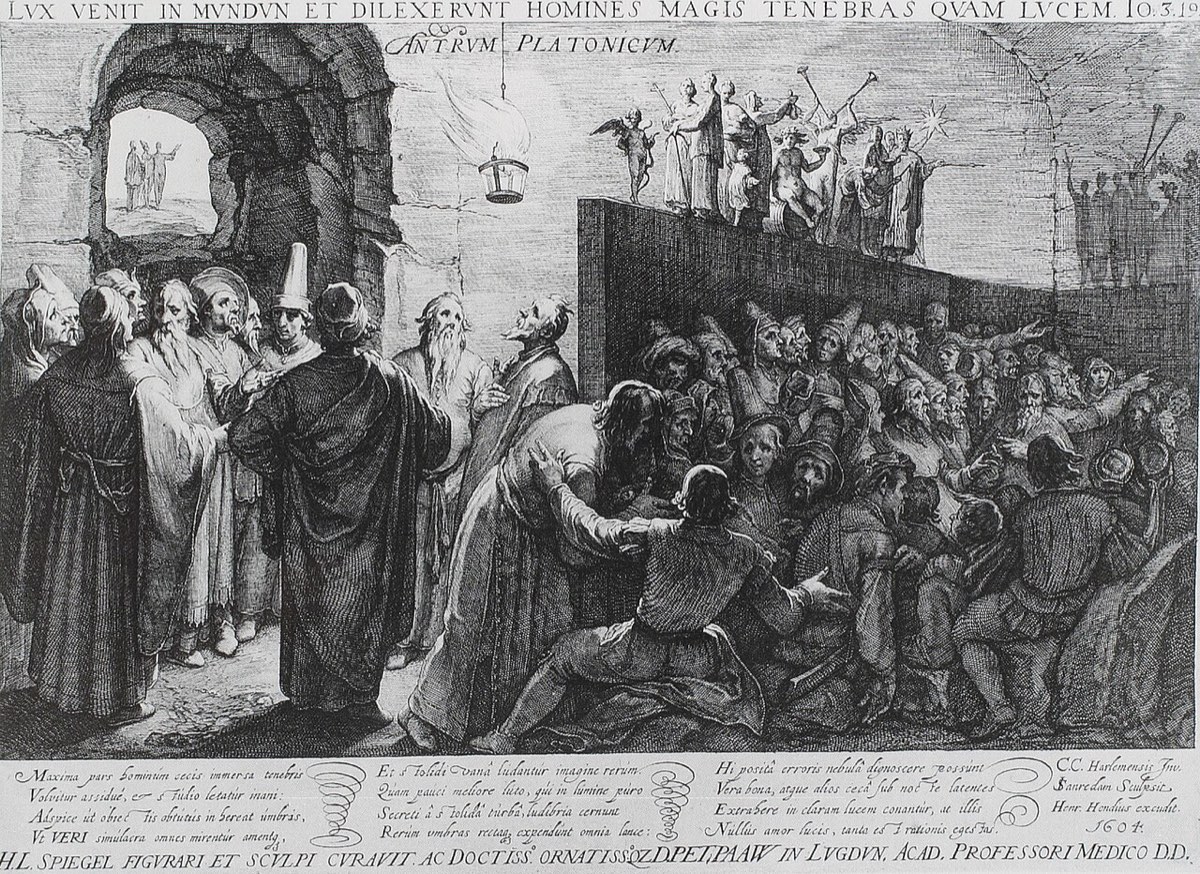
Śūnyatā: what Nagarjuna meant by emptiness, and what it is not
Nagarjuna argued that nothing exists by itself; a video lecture explains emptiness and compares it to Śaṅkara's Advaita Vedānta.
· 4 min read · Sources
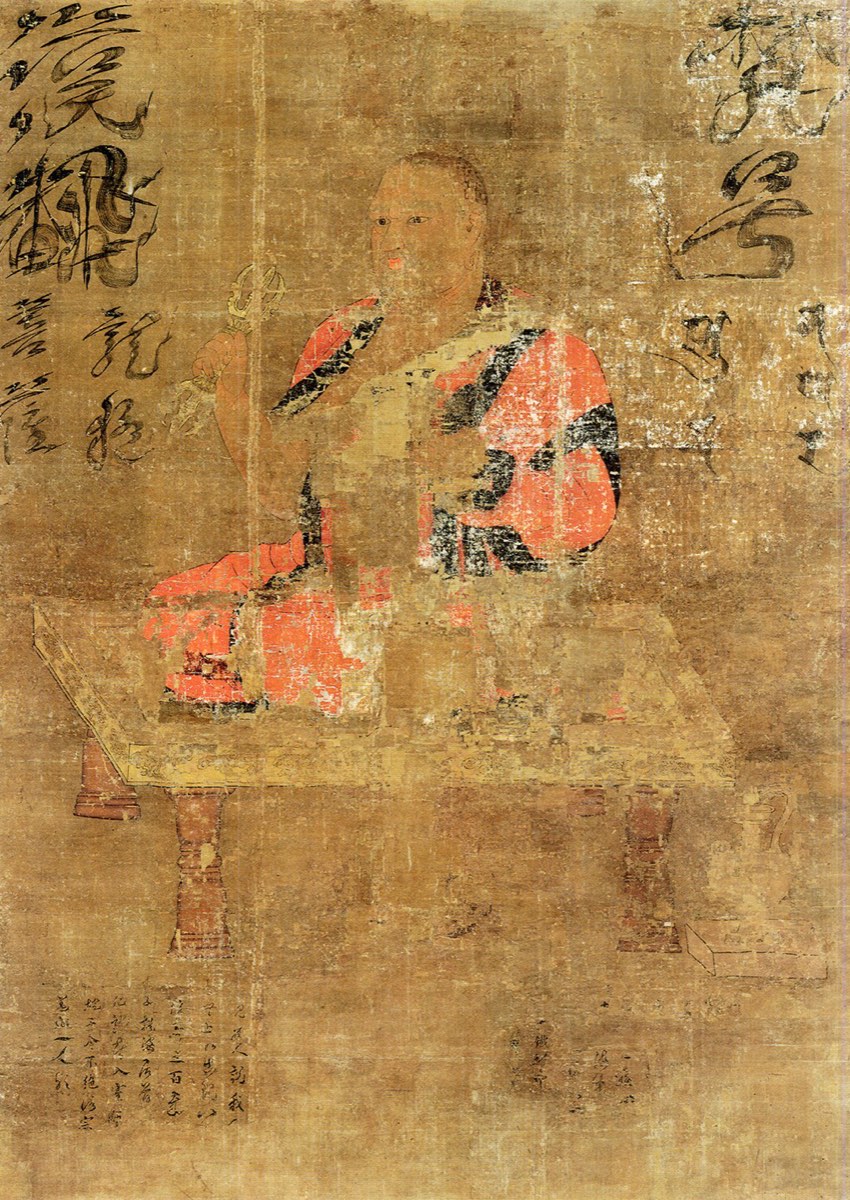

In 1 minute
- Nagarjuna, a philosopher of the Madhyamaka school, defends no thesis of his own: he shows the contradictions in others' theses to indicate that ultimate reality escapes concepts.
- Śūnyatā, emptiness, means the absence of inherent existence, not nihilism; it would be the reality that remains once illusion dissolves.
- For him, samsara and nirvana do not differ in essence, and the speaker compares this view to Śaṅkara's Advaita Vedānta, while also pointing out a difference.
Full article
What if ultimate truth were not a thesis to be proven, but something to be lived? That is Nagarjuna's wager, a monk and philosopher of Mahayana Buddhism who lived in southern India, probably between the years 150 and 250, and whom tradition presents as the founder of the Madhyamaka school, the Middle Way. His most unsettling claim is that nothing possesses inherent existence: nothing exists on its own, with a fixed essence of its own.
The idea sits at the center of his philosophy and is known by the Sanskrit name śūnyatā, “emptiness” or voidness, a Mahayana Buddhist concept that gathers central doctrines of the tradition, such as non-self and dependent origination, according to which everything arises from causes and conditions. It is one of the most misunderstood concepts in the West, and a video lecture, by a speaker the original does not identify, serves here as a guide to clearing up the misunderstanding and to comparing it with Śaṅkara's Vedantic school.
Winning without proposing anything
Most philosophical schools defend theses. Nagarjuna takes the opposite path, known as the prāsaṅgika method. He does not say what reality is: he examines his opponents' doctrines and shows where they contradict themselves, in a procedure compared to reduction to absurdity.
The result is negative by construction. Instead of describing reality, it points to what it cannot be, and holds that ultimate reality cannot be captured in words, categories, or concepts. Madhyamaka indeed holds that nothing can be stated definitively about the ultimate reality of the world.
What emptiness is not
Śūnyatā is often read, especially in the West, as nihilism, the idea that everything is nothing. The lecture insists this is not the case, and academic summaries agree: emptiness does not mean nothing exists, but that nothing exists entirely on its own, since everything depends on causes and conditions. It is the freedom of things from fixed essences.
The classic example is the rope mistaken for a snake in the dark. On turning on the light, no one creates the rope: it was already there, and what dissolves is the error. Emptiness, in this image, is what remains once the illusion dissipates.
An experience, not a doctrine
Hence the school's central argument: ultimate reality is not taught, only realized. It doesn't serve as a thesis for debate. It would be an inner experience, recognized beyond the conceptual mind and incapable of being described.
The speaker brings it close to the experience of Brahman, the ultimate reality in Advaita Vedānta, the Indian school of non-duality.
Nagarjuna and Śaṅkara
The comparison with Śaṅkara, the chief name of Advaita Vedānta, occupies part of the lecture. The two share the idea that reality is not dual and that liberation comes from removing ignorance, not from adding new knowledge.
The difference, according to the speaker, is subtle. Advaita speaks of knowing the Ātman, the self that is identical with Brahman. In Nagarjuna there is nothing to be known, because emptiness is neither object nor entity. This is a comparison made from outside both schools, and each has its own interpreters, who tend to disagree with comparisons like this.
Samsara and nirvana
One of Nagarjuna's boldest teachings, in the chapter on nirvana, denies any difference between samsara, the cycle of birth, suffering, and rebirth, and nirvana, liberation. The distinction would only hold as long as there is ignorance, avidya.
Once ignorance dissipates, one perceives that there was no real prison and no real liberation, only reality as it is. In the lecture's formulation: “If there is no prison, there is no need to be freed. What remains is peace.”
Zero and logic exhausted
To illustrate, the speaker compares emptiness to zero, which looks like nothing but makes the whole of mathematics possible. Without zero, there would be no mathematics; without śūnyatā, no relative reality could arise.
Nagarjuna's text, the lecture recalls, runs through the possible categories of existence and non-existence (was it born or not born, is it permanent or not, is it one or many, does it come or not come) to show that none of them accounts for reality. He uses words in abundance to demonstrate that no word expresses it.
Mystic or logician?
The final discussion asks whether Nagarjuna was merely a brilliant logician or someone awakened trying to communicate a direct experience. The speaker answers that he was both: a realized sage whose dialectic served to liberate, not to win debates.
In this reading, emptiness closes nothing off. It opens the possibility of seeing without the filters that supposed essences impose, and of letting go of the attachment and fear born from them.
Sources and references for this article
Video lecture on Nagarjuna and Śūnyatā (channel and speaker not identified in the original post)
Nagarjuna, Wikipedia (in Portuguese)Madhyamaka, Wikipedia (in Portuguese)Sunyata, Wikipedia (in Portuguese)Samsara, Wikipedia (in Portuguese)Translated from Portuguese. This article was rewritten from a post on the original blog, in Portuguese. Read the original
Get the best articles of the week
One email a week, no spam. Unsubscribe anytime.
Read next
 The EastWhy we suffer: Buddhism, Taoism, and karma in Laércio Fonseca's reading
 The East · VideoBruce Lee and the Philosophy of Water: Adaptation, Self-Control, and a Fighter's Legacy
 Vedanta and YogaGita, lesson 20: consciousness isn't in the world, the world is in it
 Vedanta and Yoga · VideoWhat is the form of God? What the hymn to Dakṣiṇāmūrti says, in Vedānta's reading
 Accounts and channelings · VideoWho are you without your name? A talk on social identity and the "higher self"