Pineal gland, "third eye," and "inner Christ": what's science and what's belief
The pineal gland regulates sleep; a video from the channel Mistérios do Universo treats it as a gateway to the divine, with no scientific backing.
· 3 min read · Sources

In 1 minute
- The pineal is a small brain gland that produces melatonin and regulates sleep cycles; Descartes called it the seat of the soul, but science studies it as an endocrine gland.
- The video from the channel Mistérios do Universo reads the Bible as a map of an inner process in which a "sacred oil" rises to the pineal gland and produces the "inner Christ."
- Meditation and morning sun are common wellness practices; the video's other claims, about fluoride and sound frequencies, have no scientific support.
Full article
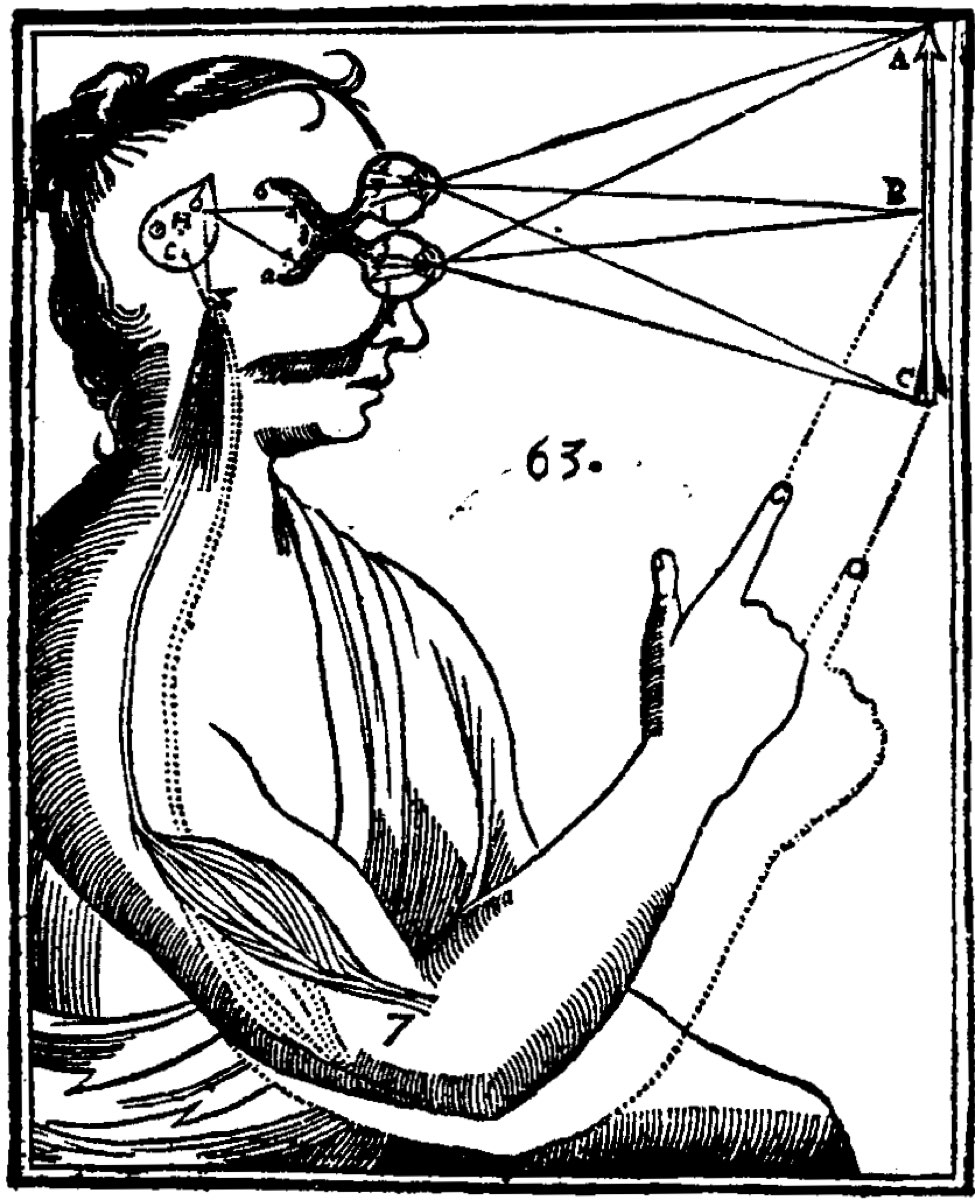
When René Descartes, in the seventeenth century, went looking in the brain for the point of contact between body and soul, he settled on the pineal gland. The idea never took hold in academic philosophy, but the small, pea-sized structure has never stopped drawing the attention of the esoteric imagination. Today it turns up in videos and books as the "third eye," a gateway to the divine, a center of awakening.
One such video, from the channel Mistérios do Universo, proposes that words attributed to Jesus are actually a map for awakening the pineal gland. It's worth carefully separating what is known about the gland from what is believed about it.
What science knows
The pineal is an endocrine gland located in the middle of the brain, present in vertebrates. It produces melatonin, a hormone derived from serotonin that modulates sleep cycles, both daily and seasonal. In evolutionary terms, it is described as an atrophied photoreceptor, derived from light-sensitive structures in ancient animals. It is also one of the structures that calcifies most with age, to the point of showing up on ordinary skull X-rays.
For research, then, it is a gland among many. Esoteric tradition assigns it another role, that of an organ of subtle perception known as the third eye. That association is a belief, with no experimental support.
The body as temple
The video's thesis is that spirituality isn't an external God or a future salvation, but rather a biological, energetic, and subtle process that occurs within the body, the "temple of God" of the biblical phrase. The pineal gland would be the central piece.
According to the channel, esoteric traditions call "Christ" a sacred oil that would be secreted in the claustrum, a region of the brain, descend to the sacral plexus, and return to the brain. The cycle would symbolize the death of the ego and the rebirth of consciousness. The line that sums up the idea: "The birth of Christ is not an external event, but an internal, symbolic experience."
The reading extends to everyday symbols: the Christmas tree would be the spine, and the star on top, the activated pineal gland; Santa Claus coming down the chimney would mirror the oil's path. These are the author's own associations, not historical records. When the oil reaches the thalamus, the ego would be symbolically crucified and give way to the "inner Christ," and the biblical "land of milk and honey" would designate the fluids of the pituitary (milk) and the pineal (honey).
The practices suggested
To create the right inner environment, the video recommends 10 to 15 minutes of daily meditation and silence, alternate-nostril breathing (Nadi Shodhana, a yoga technique that balances the ida and pingala energy channels), a natural diet of fruit, raw vegetables, and pure water, and morning sun. It also cites sound frequencies of 936 Hz, control of sexual energy, and attention to the Moon, especially during the three days when it aligns with one's birth sign, described as a portal for lucid dreams and deeper meditation.
It also advises avoiding fluoride, which supposedly calcifies the pineal gland. Meditation and morning sun are common wellness habits. But the effect of a specific frequency, the Moon, or fluoride on any supposed spiritual activation has no support, and pineal calcification is a common feature of aging, not proof of spiritual blockage.
Symbol or claim about the body
The video's final message is that awakening the pineal gland wouldn't be a miracle reserved for a few enlightened people, but a possibility open to anyone who practices with consistency and intention. The real revolution, it says, happens in what awakens from within.
As a symbol, the idea resonates with ancient traditions of interiorization, in which the divine is sought within one's own body and mind. As a claim about physiology, it has no proof. That distinction is for the reader to make, and it's the one that separates a fertile metaphor from a promise the lab doesn't confirm.
Sources and references for this article
Video from the channel Mistérios do Universo on the pineal gland and the inner Christ
Pineal gland, WikipediaThird eye, WikipediaTranslated from Portuguese. This article was rewritten from a post on the original blog, in Portuguese. Read the original
Get the best articles of the week
One email a week, no spam. Unsubscribe anytime.
Read next
 Western esotericism · VideoBlavatsky and the “veil”: a warning attributed to the founder of Theosophy that no one can verify
 Western esotericism · VideoYeshua and Sophia: a cosmic reading of Jesus and Mary Magdalene
 Science and consciousnessThe pineal gland: what science knows, and what “unblocking” it doesn't support
 Science and consciousness · VideoConsciousness during sleep: what science describes, and what is pure speculation
 Western esotericism · VideoThe seven hermetic principles of The Kybalion and the legend of Hermes Trismegistus