Listening to see: what Vedānta asks of those who want to know themselves
For Advaita Vedānta, the first step is not technique: it is quieting the rush and listening, since every person is already whole, and what's missing is seeing it.
· 3 min read · Sources

In 1 minute
- Relaxing the body is easy and relaxing the mind is rare: for Swami Dayananda, it does not obey orders, and what's needed is to discover what agitates it.
- In the Vedānta he teaches, the person is already whole (pūrṇa), and suffering comes from learned beliefs about who one is.
- The teacher does not hand over the truth, only removes obstacles, and the student must arrive with respect, curiosity and openness.
Full article
Sitting in a retreat with eyes closed guarantees nothing. The body obeys the command to relax. The mind does not. It was from that observation that Swami Dayananda Saraswati, a master of Advaita Vedānta, set out in a teaching about what it means to listen, to see and to be transformed. The question he poses comes before any technique: under what condition is someone ready to know themselves?
Advaita, a word that means "not two," is the school of Vedānta that holds there is a single reality, Brahman, and that the deep nature of each person, the Ātman, is identical to it. It is a doctrine of the Indian tradition, not an empirical conclusion, and it is in that register that the teaching should be read.
A mind that does not obey
Even someone physically present usually has their mind elsewhere: anxious to reach some point, solve a problem, or anticipate the future. The mind, Dayananda says, cannot be forced to relax. What can be done is to discover what prevents it.
Among the obstacles he points to are the urge to "achieve something," even in spiritual matters, the rush to change immediately, and attachment to the past or fear of what is to come. The alternative he proposes is called, in English, inner leisure: being present with nothing to conquer.
Seeing requires no time
To explain attention, the swami uses the image of a flower. Appreciating it takes no time, only a moment of unimpeded attention. The same would hold for self-knowledge: it does not demand effort in the ordinary sense, but rather an inner disposition to see what is already present.
Hence the idea that he speaks to one person at a time. Dayananda dispenses with the logic of an audience and addresses each listener with "I" and "you," because spiritual truth, in this view, is not understood in bulk: it is personal and silent.
Fullness, not lack
The central point is an inversion. A person would not be a sinner nor an incomplete fragment searching for wholeness. For Vedānta, each one is already pūrṇa, the full, the whole. What prevents seeing this is ignorance, the fog the texts call māyā, which in practice appears as learned beliefs about who one is. The claim, therefore, is not "you can become whole," but "you already are whole."
Everyone, the swami acknowledges, carries a limited self-image, that of an individual with a biography, flaws and guilt. That ignorance would be universal and learned from childhood on. When someone asks whether they might not, in fact, be the whole, they become jijñāsu, a legitimate seeker of the truth, and discipleship begins.
The role of the one who teaches
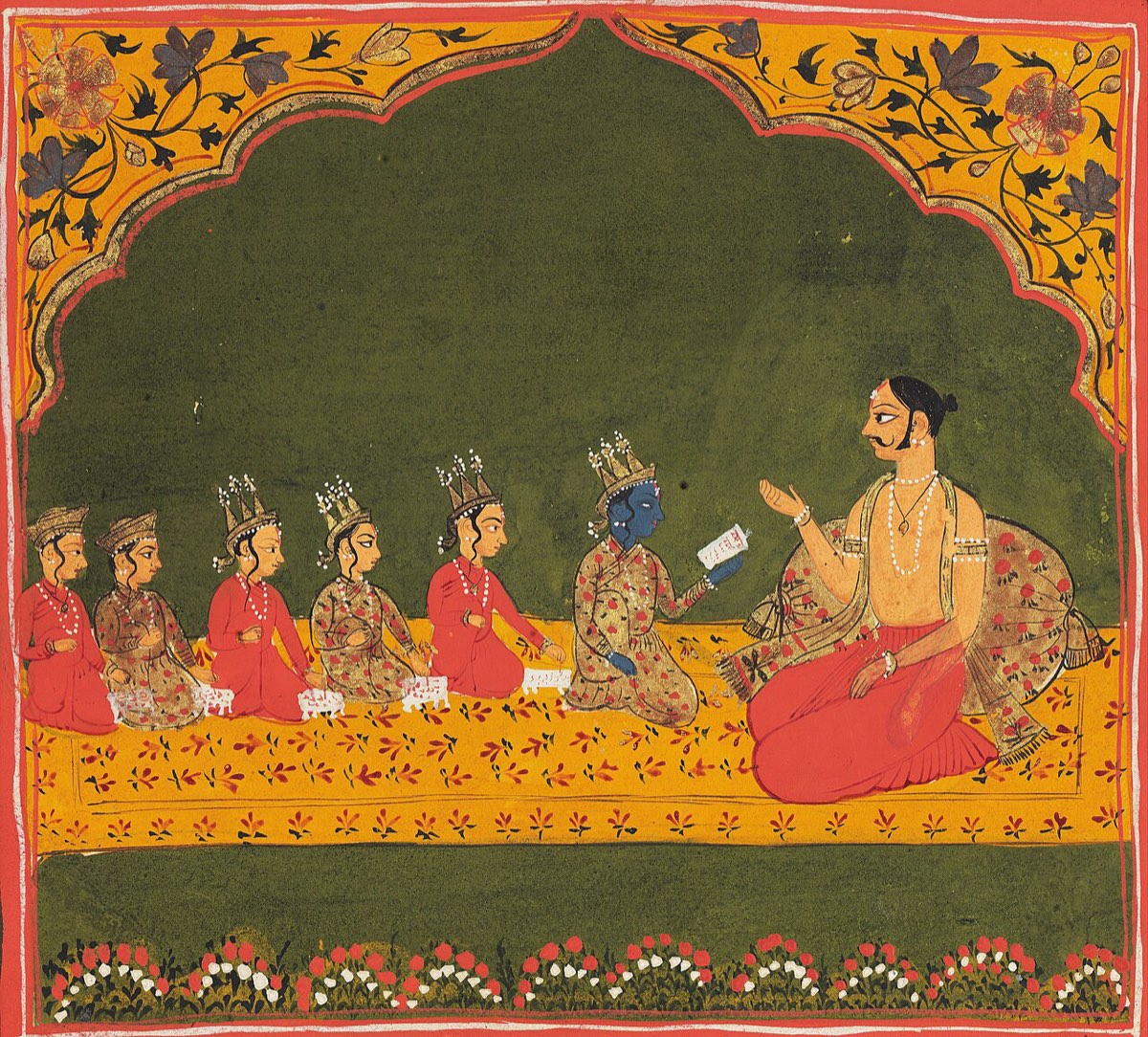
In Dayananda's view, the teacher does not give wisdom. He removes obstacles to perceiving what already is. Nor does he condemn the disciple: he respects him, because without respect the teaching would not be possible.
From the student, he asks for listening. He warns against the weight of gurus, ideologies, spiritual labels and inherited beliefs, and suggests recovering the curiosity of the child who does not know and wants to know. Before religions, groups and dogmas, he says, there was only an open consciousness.
Without jargon
In the end, the commitment is to simplicity and silence. The swami does not intend to make his listener a "spiritualist," but rather a living, present person, available to the truth. He dispenses with spiritual garb and special vocabulary and asks for listening, openness and a taste for learning.
The invitation is to see that there is nothing to conquer. What remains is to find out what happens to the listener's own rush once they hear that.
Sources and references for this article
Swami Dayananda Saraswati, teaching on listening and preparing for self-knowledge
Advaita Vedanta, Wikipedia (non-duality, Brahman and ignorance)Translated from Portuguese. This article was rewritten from a post on the original blog, in Portuguese. Read the original
Get the best articles of the week
One email a week, no spam. Unsubscribe anytime.
Read next
 Vedanta and YogaConsciousness with a body: what Vedānta says the “self” is
 Vedanta and YogaThe value of values: why Vedānta begins by preparing the mind
 Western esotericismA Hermetic manifesto against "selective blindness": mind, ether, and archons
 Science and consciousnessVedānta and quantum physics: what the observer has to do with reality
 Vedanta and Yoga · VideoThe straw of Agni: what the Kenopanishad teaches about the pride of the gods