The Principle of Vibration: the Hermetic idea that nothing in the universe stands still
For the Kybalion, everything vibrates, from stone to thought. The idea became an ethical key: each person would answer for what they give off.
· 3 min read · Sources
Source video
NEW ACROPOLIS · “Caibalion – Ep. 9 | O Enigma da Compreensão Filosófica: Por que nem tudo é para ser entendido?”
In 1 minute
- The Principle of Vibration, one of the Kybalion's seven, holds that everything in the universe moves at some frequency, from the densest matter to spirit.
- In the reading taught at schools such as Nova Acrópole, each person's identity is vibrational and carries responsibility for what they inspire in others.
- For Hermeticism, a miracle is just the action of a law not yet known; physics speaks of matter in motion but does not endorse the idea's spiritual extension.
Full article
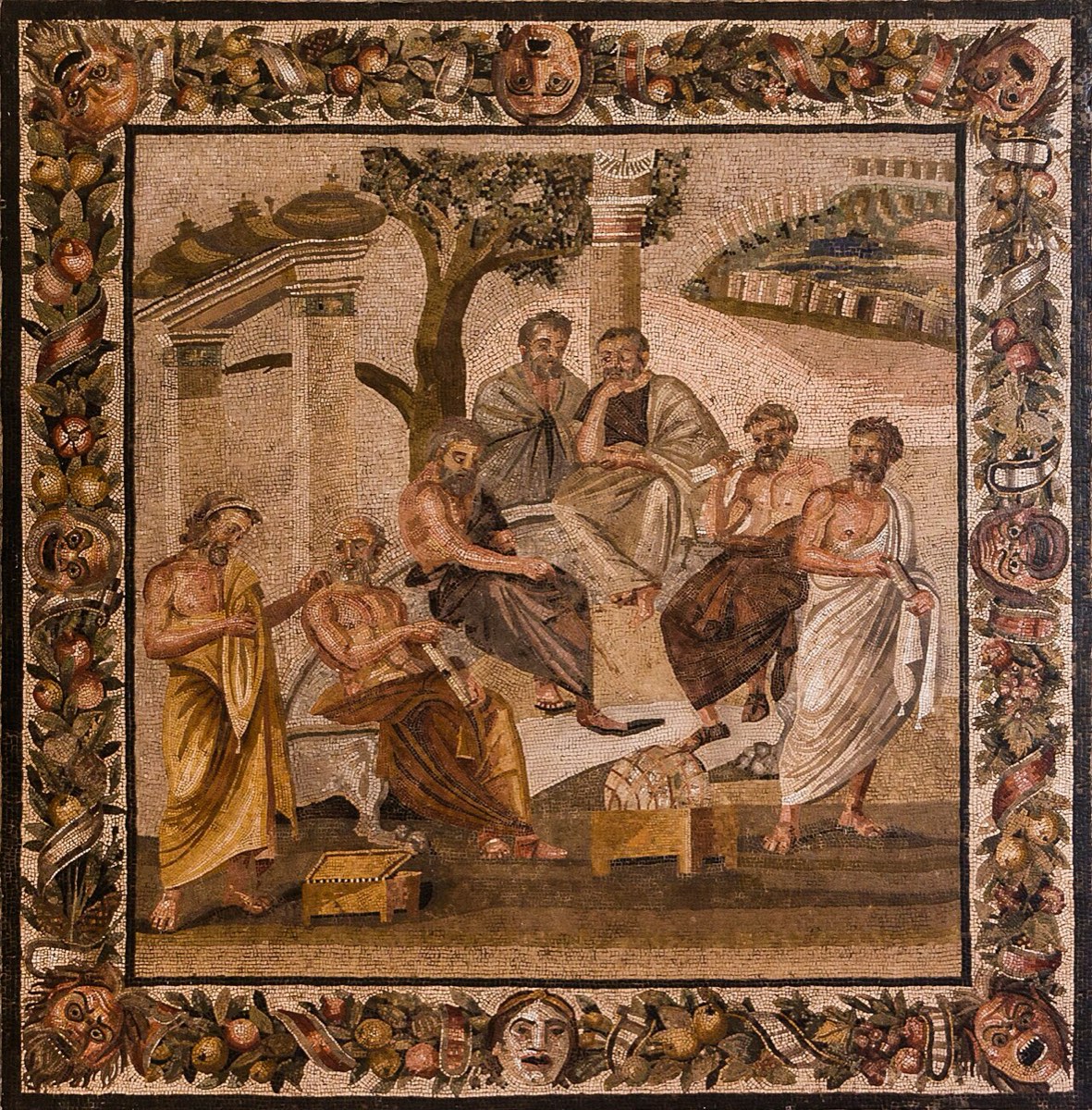
If someone asked who you are, the most honest answer might not be your name, your job or your city. It might be what moves you, what outrages you, what inspires you. That provocation, attributed to Plato in philosophy classes, is usually the starting point for studying one of Western esotericism's most quoted principles: that everything vibrates.
The Kybalion, a book published in 1908 in the United States under the pseudonym "Three Initiates," organizes the Hermetic tradition into seven principles. The Principle of Vibration comes down to a short sentence: nothing stands still, everything moves. It is also the principle most often lifted out of the book, in phrases like "raise your vibration," which makes it worth understanding what it actually says, and where its analogy with science ends.
From atom to spirit
Modern physics describes matter as something that is not solid: atoms and particles are in constant motion. Hermeticism starts from that image and takes a step science does not take. Thoughts, emotions and intentions would also vibrate, and it is through that channel that each person would influence the surrounding environment.
In the Hermetic reading, frequency defines what a being is and whom it reaches. The idea extends to the cosmos, in nested circles: electrons around the nucleus, planets around the Sun, stars around the galaxy's center. At the end of that chain would stand the ALL, the ultimate reality that holds everything that exists together.
Identity as frequency
Hence the answer to Plato. Identity, in this key, is what a person admires, feels, rejects or keeps silent about. Philosophy schools such as Nova Acrópole, which teach The Kybalion chapter by chapter, link this idea to other traditions. In India, each person's "inner name" would be the frequency at which the soul resonates. In Tibetan Buddhism, the Bardo Thödol, the book of the dead, teaches that recognizing one's own nature after death allows one to cross the intermediate state.
The name, in this sense, is not a word but an essence. The commitment that follows from it is twofold: accepting what one is today, and working to be more tomorrow. Evolution, Hermeticists say, does not deny what already exists. It purifies and expands it.
No one vibrates without consequence
The principle's moral weight lies in responsibility. If everything vibrates, every thought, word and gesture contaminates or purifies the world around it. Sadness drags others down, serenity calms, a presence inspires or repels. In the words of a Nova Acrópole lecture on the subject: "You are responsible not only for what you do, but for what you inspire."
This is the Hermetic version of karma. Using people or animals for one's own benefit would lower the vibration of the one being used; care, education and fraternal coexistence would help raise it. The influence can be silent. When someone of great integrity enters a room, people sit up straighter, not out of fear, but because something rises.
Notes, strings and poles
Hermeticists describe every plane of existence as giving off its own energy. Matter in motion releases heat, emotions release emotions, the mind releases ideas and influences. The preferred image is musical: each person would be an instrument, and self-mastery would mean knowing every string and choosing which ones to play.
This principle converses with the next one in the book, that of Polarity. Dense matter and subtle spirit seem opposite, but both appear to be at rest, one because it vibrates too slowly, the other because it vibrates too fast. They would be the same thing at different degrees.
Miracle as an unknown law
From this logic comes the Hermetic reading of the miracle: it does not exist. What receives that name would simply be a law not yet known, at work, and whoever masters finer laws produces effects that look like magic to those who do not know them.
This is where the bridge to science needs care. Physics measures the vibration of particles, waves and fields; it does not measure moral vibration or the frequency of the soul. The Principle of Vibration works as an ethical map and an image of the world, not as physical theory. Read that way, it returns to the question at the start: what note is each of us playing? The next chapter of The Kybalion deals with Polarity.
Sources and references for this article
The Kybalion, Three Initiates, 1908 (full text in English, Project Gutenberg)Kybalion, Wikipedia (publication, authorship and the seven principles)Hermeticism, WikipediaNova Acrópole lecture on the Kybalion, chapter 9Translated from Portuguese. This article was rewritten from a post on the original blog, in Portuguese. Read the original
Get the best articles of the week
One email a week, no spam. Unsubscribe anytime.
Read next
 Western esotericism · VideoThe seven hermetic principles of The Kybalion and the legend of Hermes Trismegistus
 Western esotericismA Hermetic manifesto against "selective blindness": mind, ether, and archons
 Vedanta and YogaVedānta: texts, schools, and the study method of one of India's six philosophies
 Vedanta and YogaGita, lesson 13: the four aims of life and what each one can give
 Western esotericism · VideoWhy No Outer Change Lasts Without Inner Change, According to Stoic Philosophy