The ALL in all: the Hermetic idea that the divine lives within every part of creation
For Hermeticism, the ALL is present in every part of the universe as essence, and evolving means revealing each one's divine side without dissolving identity.
· 3 min read · Sources
Source video
NEW ACROPOLIS · “Caibalion - Ep. 7 | A centelha, o universo e você — Reflexões sobre o TODO - Lúcia Helena Galvão”
In 1 minute
- The Kybalion says everything is within the ALL and the ALL is within everything, as Shakespeare is in Othello without Othello being Shakespeare.
- Evolving would mean fully revealing the divine aspect each being carries, in a cycle of descent into matter (involution) and return to consciousness (evolution).
- Returning to the ALL would be expansion, not dissolution, like a drop becoming the ocean; these are Hermetic ideas, not scientific ones.
Full article
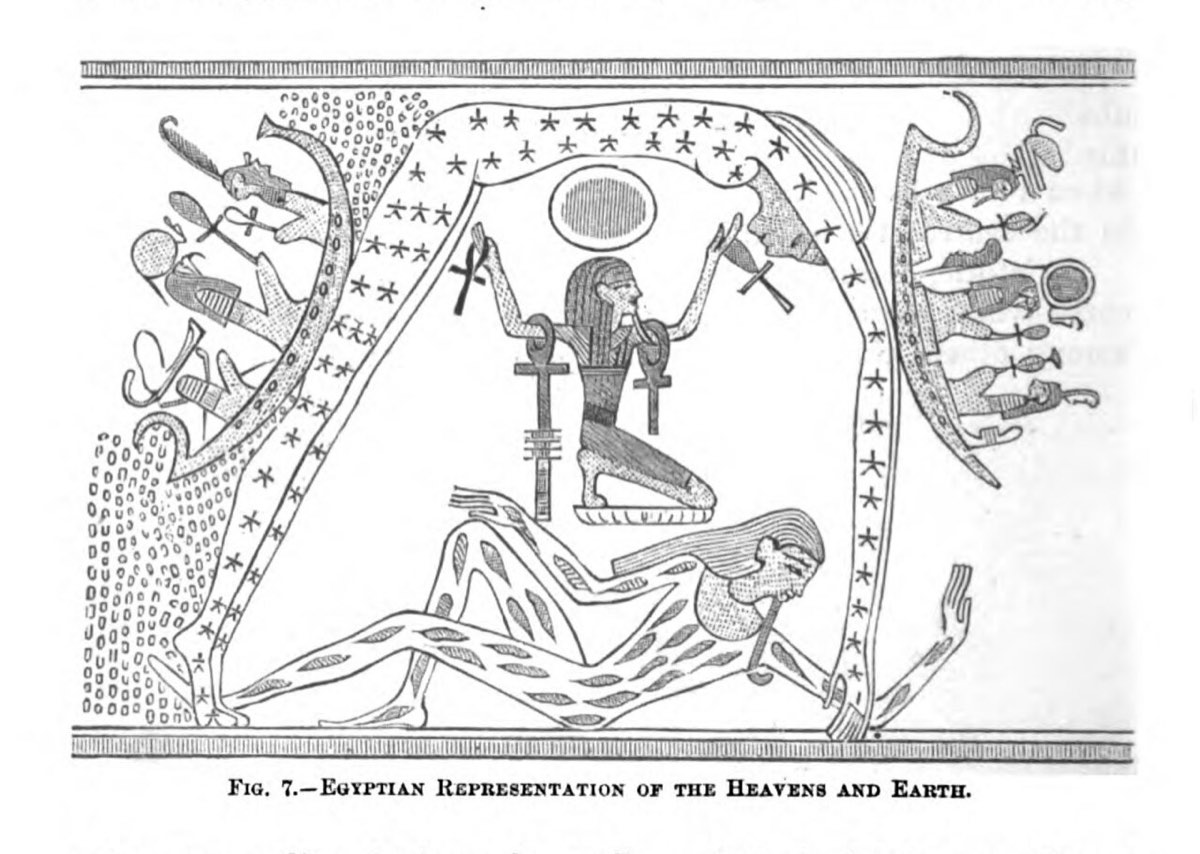
Osiris, in Egyptian myth, had his body torn apart and scattered along the Nile. His wife, Isis, traveled the river gathering each fragment to rebuild the god whole. Philosophy schools that teach the seventh chapter of The Kybalion, such as Nova Acrópole, use that story as an image of what the book says about the ALL: it would be present in every part of creation, and to know each being deeply would be to gather the divine back together.
The Kybalion, published in 1908 under the pseudonym "Three Initiates," organizes Hermeticism into seven principles, and the ALL is the name it gives to ultimate reality. The claims about the ALL and the evolution of consciousness belong to that tradition, not to scientific study.
Within and without
The chapter's central paradox is that everything is within the ALL, and, equally, the ALL is within everything. The manifested universe would be a mental creation of the ALL, as the Principle of Mentalism states, but the ALL would also be found in every part of that creation, not as a fragment, but as essence.
The comparison with Shakespeare returns: the author is in Othello, but Othello is not Shakespeare. In the same way, God would be in us without our being God. We would be aspects of the Divine Mind, reflections of a greater intelligence.
From this idea comes an ethics of respect. If every being holds a piece of the ALL, respecting another would mean respecting the part of God they carry within them, even without realizing it.
The scroll and the inner name
Evolving, in this reading, is not about accumulating things, nor even just knowledge. It is about fully revealing the aspect of the divine each person carries. The Indian tradition calls this finding one's "inner name," the unique message each person would have to offer the universe, which, in the teachers' words, waits for that person to speak their word.
Etymology helps here. "To develop" comes from unrolling the scroll, as with ancient papyri. Each being would carry a sacred text within, and life's task would be to unroll it and read it, discovering who one is, where one came from, and for what purpose.
Descending and ascending
The universe, in this view, follows a two-phase cycle. In involution, the ALL manifests, plunges into matter and "forgets itself." In evolution, the being returns to its origin, expanding consciousness until it meets the ALL again. Everyone descends together, but each one ascends on their own, building consciousness along the way. The journey appears in an image: the universe would sleep in stone, dream in the plant, awaken in the animal, and only become aware of itself in the human being.
The spiritual ego
The chapter also warns against the arrogance of believing that, because one carries something divine, one is the entire ALL. Neither stone nor human being is God. Both carry a spark, and the ALL is far more than the sum of its parts. Humility would be the foundation of a spirituality that recognizes the person as part of the whole, not as the owner of truth.
On the other hand, everything would have value simply by existing, not only by the use made of it. Water deserves respect because it is; stone expresses love through cohesion and molecular order; the diamond expresses perfection at its own level. The teachers see in this view an antidote to utilitarian selfishness.
Expansion, not dissolution
One point held to be fundamental is that returning to the ALL dissolves no one. The image of the drop and the ocean returns: the drop is not lost, it expands until it is the size of the ocean. Consciousness would grow without giving up identity, and what Hermeticism promises would be fulfillment, not annulment.
Values that need a body
Love, justice and truth, in this reading, do not live in a world of pure ideas. They need someone to express them here: a heart that translates love, an honest gaze that reveals justice, a courageous voice that speaks truth. Every being would have the mission of anchoring an aspect of the divine in this world.
Spirituality, then, would not be an escape from the world, but a return to it with awareness, service and presence. Each person would be a crack through which the divine wants to shine, and when everyone fulfills that role, the ALL would see itself reflected whole. The next chapter in the series deals with the Principle of Correspondence.
Sources and references for this article
Nova Acrópole lecture on the Kybalion, chapter 7_The Kybalion_, chapter 7: The All in All
Kybalion, Wikipedia (published in 1908, and the seven principles)The Kybalion, Three Initiates, 1908 (full text in English, Project Gutenberg)Translated from Portuguese. This article was rewritten from a post on the original blog, in Portuguese. Read the original
Get the best articles of the week
One email a week, no spam. Unsubscribe anytime.
Read next
 Western esotericism · VideoThe seven hermetic principles of The Kybalion and the legend of Hermes Trismegistus
 Western esotericism · VideoThe Kybalion and its seven principles: a 1908 book that speaks in Egypt's name
 Death and beyond · VideoAlan Watts and death as return: why accepting the end can free us from fear
 Vedanta and YogaGita, lesson 3: the Mahābhārata as the setting for the teaching
 Western esotericism · VideoFrom Nun to Horus: how ancient Egypt told the story of creation