Death as companion: what Vedānta teaches about time, discipline, and urgency
For Vedānta, death accompanies every person from birth, and it is death that gives life its weight and urgency, according to teacher Uddhava.
· 3 min read · Sources

In 1 minute
- For Vedānta teacher Uddhava, death is not a future event: it accompanies a person from birth and gives life its weight and urgency.
- In the Vedic tradition, death has a name, Yama, lord of dharma; spiritual discipline (tapas) and teaching methods (prakriyās) are ways of coming to terms with it.
- Uddhava argues that the modern mind, caught in a materialist view, needs Vedic symbolism and cosmology to understand what Vedānta points to.
Full article
When a listener asked, during a live broadcast, how to take death as a companion, Vedānta teacher Uddhava answered by undoing the premise: there is nothing to take up, because death has already been at everyone's side since their very first day. The answer took up the rest of the class and moved through time, discipline, and the way Vedānta teaches.
Vedānta is the Indian philosophical tradition that investigates the nature of the self based on the texts of the Upaniṣads. The idea that death organizes life is not exclusive to it: it is also found in ancient philosophy and in many religions. What Vedānta adds is a vocabulary of its own, from Yama to tapas, and a practical conclusion. This piece lays out Uddhava's argument as the tradition formulates it, without adding facts from outside it.
Death as process
Death, Uddhava says, is not something that will happen one day, but something happening now. Life and death would not be separate things: they would walk together from birth. He summed up the idea with a good-humored image: “We're born already in a committed relationship with death.”
From this perspective comes a practical consequence. Most people live as if time were infinite. Vedānta invites us to see life as brief and, precisely for that reason, valuable. The limit is what gives substance to what one does.
Yama, lord of dharma
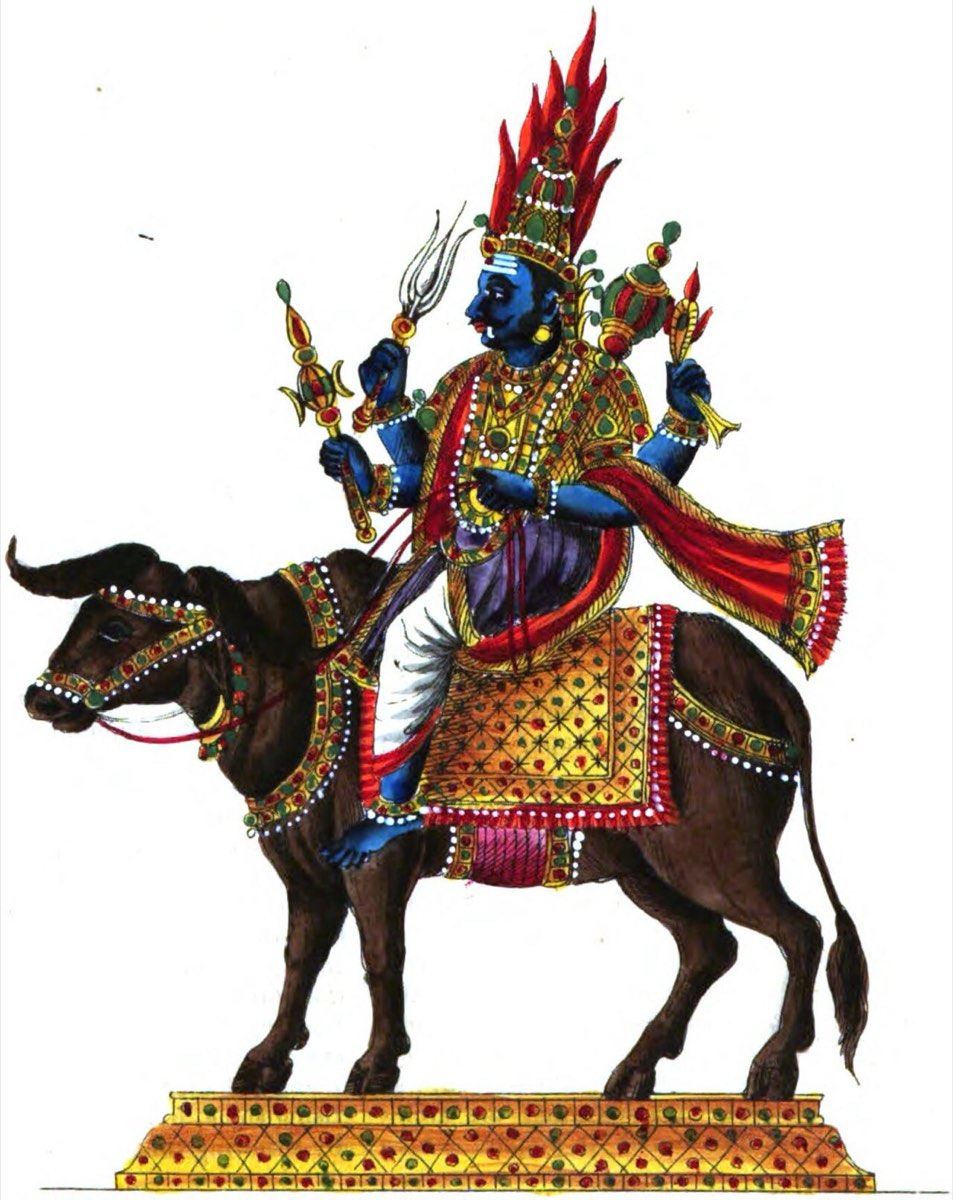
The Vedic texts give death a name and a face: Yama, lord of dharma, a word that brings together the ideas of order, duty, and right conduct. Yama does not appear as punishment, but as the principle that organizes life.
Ethics, compassion, and responsibility, Uddhava argues, derive from the fact that one will die. Whoever contemplates their own death has less room for procrastination and more reasons to do what needs to be done.
Tapas, the friction with impulses
Tapas is translated as asceticism or spiritual discipline. Literally, the word refers to heat. Uddhava describes it as the friction between will and impulse, which strengthens the former and gives the practitioner mastery over the latter.
It can be fasting, silence, keeping vigil, or celibacy. It can also be marriage: he says, half joking, that the most demanding tapas he has ever practiced was getting married and raising children. The truly decisive one, he states, is meditation and study, the effort of living with clarity in the face of life and death.
Prakriyās: methods meant to be abandoned
The prakriyās are the teaching procedures Vedānta uses to point toward what the tradition calls the Self. Uddhava insists they are not ends in themselves: they serve to undo mistaken ideas about identity and are set aside once they have done their job.
He cites three. The first is that of cause and effect: the pot is made of clay and returns to it, just as the universe would dissolve back into Brahman, the ultimate reality. The second examines the three states of consciousness — waking, dreaming, and deep sleep — which would be perceived by something that does not change. The third describes the five sheaths — body, vital energy, mind, intellect, and bliss — as layers, none of which is the Self.
Cosmology and the modern mind
Uddhava also explained the tradition's cosmic cycles. Brahma-loka is the highest plane of experience, where Brahmā, the creator, resides. One day of Brahmā corresponds to 4.32 billion years; the night, in which the universe dissolves back into potential, lasts the same length. For him, these scales are not mere myths: they are symbolic forms meant to loosen one's fixation on linear time.
The mind trained in a scientific, materialist view, he assesses, has trouble with this language. Whoever imagines the world made of atoms will tend to understand the tradition's elements as building blocks, and that would be a distortion. In Vedānta's reading, only consciousness is, and matter would be merely name and form (nāma-rūpa).
What remains
Uddhava closed with a redefinition of dying well. It is not about securing a heaven afterward, but about leaving no unfinished business here. Contemplating death would thus lead to right action, carried out with presence and responsibility.
The question the class leaves behind is a practical one: if death already accompanies every person, what is there still left to do?
Sources and references for this article
Live broadcast by teacher Uddhava on death and the methods of Vedānta
Translated from Portuguese. This article was rewritten from a post on the original blog, in Portuguese. Read the original
Get the best articles of the week
One email a week, no spam. Unsubscribe anytime.
Read next
 Vedanta and YogaKatha Upanishad: the young Nachiketas and the question Death tried to dodge
 Vedanta and YogaGita, lesson 5: a blind king's question and the field of dharma
 Science and consciousnessVedānta and quantum physics: what the observer has to do with reality
 The East · VideoBruce Lee and the Philosophy of Water: Adaptation, Self-Control, and a Fighter's Legacy
 Vedanta and Yoga · VideoUpa-paramā: Vedānta's renunciation means leaning on nothing, not giving up everything